
In medical device manufacturing, selecting the right injection molding partner involves much more than comparing piece prices or evaluating production capacity. The decisions made during supplier selection can directly influence product quality, regulatory compliance, manufacturing efficiency, supply chain reliability, and the total cost of a medical device program.
As medical technologies become increasingly sophisticated, OEMs face growing pressure to accelerate product development, manage costs, maintain consistent quality, and ensure reliable production throughout the product lifecycle.
Choosing a contract manufacturing partner capable of supporting these demands requires careful evaluation of technical expertise, manufacturing capabilities, quality systems, operational discipline, and long-term commitment.
At Medbio, we recognize that successful medical manufacturing partnerships are built on transparency, collaboration, technical expertise, and consistent execution.
Understanding five common mistakes in medical injection molding supplier selection can help OEMs reduce risk, avoid unnecessary costs, and position their programs for long-term success.
1. Selecting a Supplier Based Primarily on the Lowest Quote
One of the most common mistakes in medical injection molding is evaluating suppliers primarily on quoted piece price rather than the total cost of manufacturing.
While competitive pricing is important, the lowest initial quote does not always represent the most economical solution over the life of a medical device program.
A quote that appears attractive upfront may exclude essential considerations such as tooling requirements, process validation, inspection, secondary operations, packaging, automation, or ongoing maintenance.
These omissions can lead to unexpected expenses, production inefficiencies, and costly changes after a program has already begun.
A more effective approach is to evaluate the total cost of ownership, including:
Quite often they see these common missteps being made in their industry as well:
- Tool design, construction, maintenance, and expected service life
- Material selection and processing requirements
- Part manufacturability and production efficiency
- Inspection, quality assurance, and validation requirements
- Assembly, secondary operations, and packaging
- Automation opportunities and future production scalability
- Supply chain reliability and long-term program support
Early collaboration between an OEM’s engineering team and its manufacturing partner can identify opportunities to improve part design, simplify manufacturing, reduce scrap, and optimize production costs before significant investments are made.
The Medbio Advantage
Medbio combines design for manufacturability (DFM), in-house tooling, precision injection molding, automation, assembly, and packaging to help customers evaluate manufacturing requirements from a broader program perspective.
By considering the entire manufacturing process rather than focusing exclusively on piece price, Medbio helps customers identify opportunities to improve efficiency, manage risk, and control long-term program costs.
2. Underestimating the Importance of Service, Communication, and Accountability
A successful manufacturing partnership requires more than delivering components that meet dimensional specifications.
Medical device programs depend on effective communication, technical collaboration, responsive problem-solving, and clearly defined accountability.
When suppliers operate primarily as transactional vendors, customers may experience communication gaps, slow responses, limited engineering support, and unexpected challenges when manufacturing requirements change.
These issues can become particularly disruptive during product launches, production scale-ups, engineering changes, or supply chain interruptions.
OEMs should evaluate a manufacturing partner’s ability to provide:
- Responsive engineering and technical support
- Clear communication and project accountability
- Cross-functional collaboration between engineering, quality, and operations
- Proactive identification and resolution of manufacturing challenges
- Structured program management and production planning
- Support for engineering changes and product lifecycle requirements
- Reliable communication throughout the customer relationship
A manufacturing partner that understands the broader objectives of a medical device program can contribute to better decisions, fewer disruptions, and stronger long-term performance.
The Medbio Advantage
Medbio approaches customer relationships as long-term manufacturing partnerships.
Our cross-functional teams bring together engineering, tooling, manufacturing, quality, and operations expertise to support customers from early development through sustained production.
For OEMs facing challenges with an existing supplier, Medbio also offers established tooling transfer and manufacturing transition capabilities.
Our teams work collaboratively to evaluate existing tooling, identify potential manufacturing risks, establish appropriate validation requirements, and develop transition strategies designed to protect product quality and continuity of supply.
By prioritizing responsiveness, transparency, and accountability, Medbio works to become an extension of our customers’ operations rather than simply another component supplier.
3. Overlooking Process Validation, Quality Systems, and Traceability
Medical injection molding demands consistent manufacturing processes, disciplined quality management, and appropriate documentation.
A supplier’s ability to produce an acceptable sample does not necessarily demonstrate its ability to manufacture components consistently across thousands or millions of production cycles.
Without effective process controls, validation practices, and monitoring systems, manufacturers may encounter dimensional variation, inconsistent part quality, excessive scrap, or unexpected production disruptions.
These challenges can create additional costs, increase quality risks, and potentially affect downstream assembly or finished medical device performance.
OEMs should carefully evaluate whether a manufacturing partner has:
- An established medical device quality management system
- Documented manufacturing and inspection procedures
- Risk-based process validation practices
- Appropriate in-process monitoring and inspection capabilities
- Material and production traceability
- Controlled documentation and change management
- Corrective and preventive action processes
- Defined procedures for maintaining validated manufacturing conditions
Regulatory expectations also continue to evolve.
Effective February 2, 2026, the U.S. Food and Drug Administration’s Quality Management System Regulation (QMSR) incorporated ISO 13485:2016 into the medical device quality management framework under 21 CFR Part 820.
This change further reinforces the importance of risk management, documented quality systems, and consistent manufacturing controls for organizations subject to applicable medical device regulations.
The Medbio Advantage
Medbio operates within an ISO 13485-certified quality management system, supporting disciplined medical manufacturing processes and documented quality requirements.
Our approach integrates process development, validation, production monitoring, inspection, and traceability to support consistent manufacturing performance.
By combining experienced technical teams with controlled manufacturing processes, Medbio helps customers manage product quality, support applicable regulatory requirements, and maintain confidence throughout the manufacturing lifecycle.
4. Failing to Evaluate Manufacturing Environment, Equipment, and Operational Discipline
The condition of a manufacturing facility can provide valuable insight into a supplier’s commitment to quality, safety, process control, and long-term operational performance.
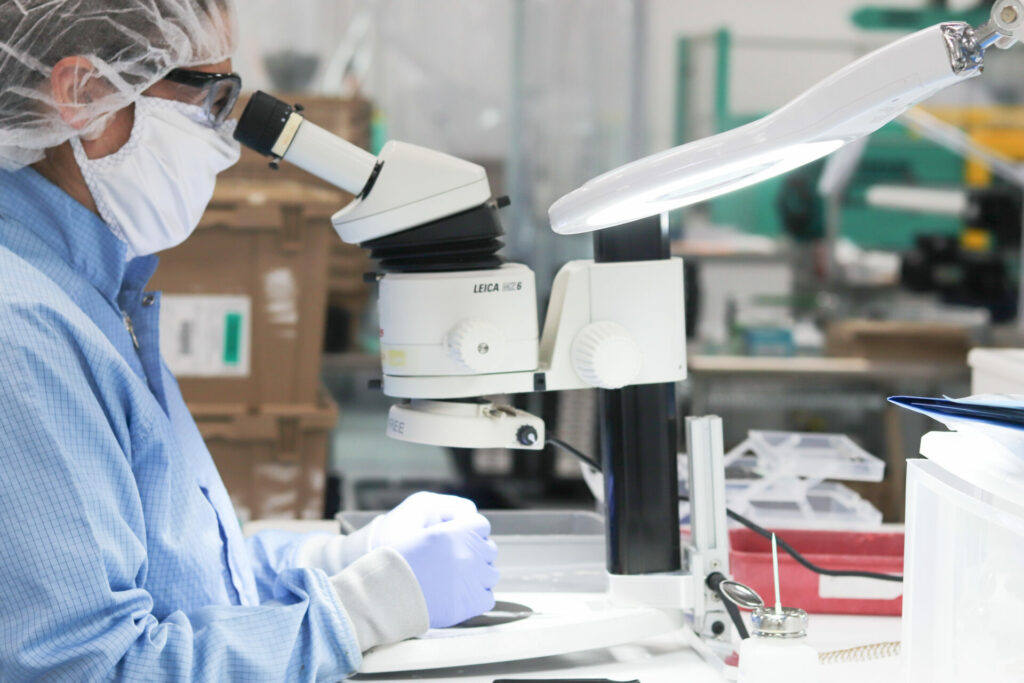
Medical manufacturing requires more than modern equipment. It demands disciplined processes, appropriate environmental controls, preventive maintenance, trained personnel, and a culture of continuous improvement.
Outdated equipment, inadequate maintenance, poor organization, or insufficient environmental controls can contribute to manufacturing variability, contamination risks, equipment downtime, and inconsistent production performance.
These challenges may become more significant as production volumes increase or product requirements become more demanding.
When evaluating a medical injection molding partner, OEMs should consider:
- Equipment capabilities, condition, and maintenance practices
- Manufacturing cleanliness and facility organization
- Cleanroom molding and assembly capabilities when required
- Environmental monitoring and contamination control practices
- Automation and integrated inspection technologies
- Employee safety programs and operational procedures
- Capacity planning and production scalability
- Ongoing investments in equipment, technology, and workforce development
Facility visits and supplier audits provide opportunities to assess how effectively these elements are integrated into daily operations.
A well-maintained and organized manufacturing environment can demonstrate the discipline required to support precision medical device production.
The Medbio Advantage
Medbio maintains manufacturing operations designed to support the demanding requirements of medical device and biotechnology customers.
Across our facilities in Grand Rapids, Michigan; Clinton Township, Michigan; and Orchard Park, New York, we combine precision injection molding equipment, in-house tooling expertise, automation, and controlled manufacturing processes.
Our capabilities include ISO Class 7 and ISO Class 8 cleanroom manufacturing environments to support programs with specific cleanliness and contamination control requirements.
Medbio emphasizes equipment maintenance, operational organization, employee safety, and continuous improvement as essential elements of reliable manufacturing performance.
Our multi-site manufacturing footprint also provides customers with opportunities to align their programs with appropriate equipment, technical capabilities, and production capacity.
5. Underestimating the Value of Skilled Employees and Technical Expertise
Advanced manufacturing equipment alone does not guarantee successful medical device production.
Behind every reliable manufacturing process are experienced professionals who understand materials, tooling, processing conditions, inspection requirements, equipment performance, and quality expectations.
A supplier’s ability to attract, develop, and retain skilled employees can significantly influence manufacturing consistency, technical problem-solving, responsiveness, and long-term program success.
Medical injection molding requires specialized expertise across multiple disciplines, including:
- Tool design, construction, and maintenance
- Scientific injection molding and process development
- Robotics and manufacturing automation
- Quality engineering and inspection
- Equipment maintenance and troubleshooting
- Process validation and documentation
- Assembly, packaging, and production operations
As manufacturing technologies become more sophisticated, continuous workforce development is increasingly important.
Experienced personnel can identify potential problems earlier, troubleshoot production challenges more effectively, and support ongoing improvements in quality and manufacturing efficiency.
The Medbio Advantage
At Medbio, our people are central to our ability to deliver reliable medical manufacturing solutions.
We recognize that specialized technical knowledge, teamwork, and a commitment to quality are essential to supporting our customers’ success.
Our experienced professionals work collaboratively across engineering, tooling, manufacturing, automation, quality, and operations to solve complex manufacturing challenges.
We emphasize employee development, knowledge sharing, cross-functional collaboration, and continuous improvement to strengthen our technical capabilities.
By investing in our people and fostering a culture of accountability and teamwork, Medbio builds the expertise necessary to support customers throughout the product lifecycle.
Choosing the Right Medical Injection Molding Partner
Selecting a medical injection molding partner is a strategic decision that can influence far more than the cost of an individual component.
The right manufacturing partner should help OEMs reduce risk, improve manufacturability, maintain consistent quality, manage production costs, and adapt to changing program requirements.
Beyond evaluating initial quotations, medical device manufacturers should consider the broader capabilities and operational discipline of potential suppliers.
Five critical considerations include:
- Total Cost of Ownership: Look beyond piece price to understand the full manufacturing investment and long-term program costs.
- Communication and Accountability: Choose a partner that demonstrates responsiveness, transparency, and cross-functional collaboration.
- Quality and Validation Discipline: Look beyond piece price to understand the full manufacturing investment and long-term program costs.
- Manufacturing Capabilities and Environment: Confirm that equipment, facilities, process controls, and capacity align with current and future production needs.
- People and Technical Expertise: Assess the experience, capabilities, and commitment of the professionals responsible for delivering your program.
When these factors are considered together, OEMs can make more informed supplier decisions and establish manufacturing partnerships built for long-term success.
Partner with Medbio to Reduce Risk and Strengthen Manufacturing Performance
At Medbio, we understand the challenges medical device OEMs face when bringing complex products to market and maintaining reliable manufacturing operations.
As an integrated medical contract manufacturing partner, we bring together engineering collaboration, design for manufacturability, in-house tooling, precision injection molding, cleanroom manufacturing, automation, assembly, packaging, and quality expertise.
Our comprehensive capabilities help customers reduce supplier complexity, improve coordination, and manage manufacturing requirements throughout the product lifecycle.
Whether you’re developing a new medical device, evaluating opportunities to improve an existing manufacturing process, increasing production capacity, or considering a tooling transfer from another supplier, Medbio provides the technical expertise and manufacturing infrastructure to support your objectives.
The right manufacturing partnership goes beyond producing parts. It helps protect your program, strengthen your supply chain, and support long-term success.
Let’s Discuss Your Next Medical Manufacturing Project
Discover how Medbio’s integrated manufacturing capabilities, experienced technical teams, and commitment to quality can help advance your medical device program.
Contact Medbio today to discuss your project, explore our capabilities, or schedule a facility visit.